
Most articles about music marketing strategies repeat the same tired advice. Post on social media, pitch playlists, run ads, and hope something sticks. That advice is not wrong, but it is incomplete. The real gap around this keyword is that almost no one talks about how artists build momentum systems instead of just doing promotions. Marketing music today is less about shouting louder and more about engineering repeatable attention.
This article focuses on strategies that working artists and managers are actually using, especially at the independent and semi professional level where budgets are limited and mistakes are expensive.
Understanding the Real Goal of Music Marketing
Before tactics, clarity matters. The biggest misconception I see is that music marketing equals streams. In practice, streams are a lagging indicator, not the goal.
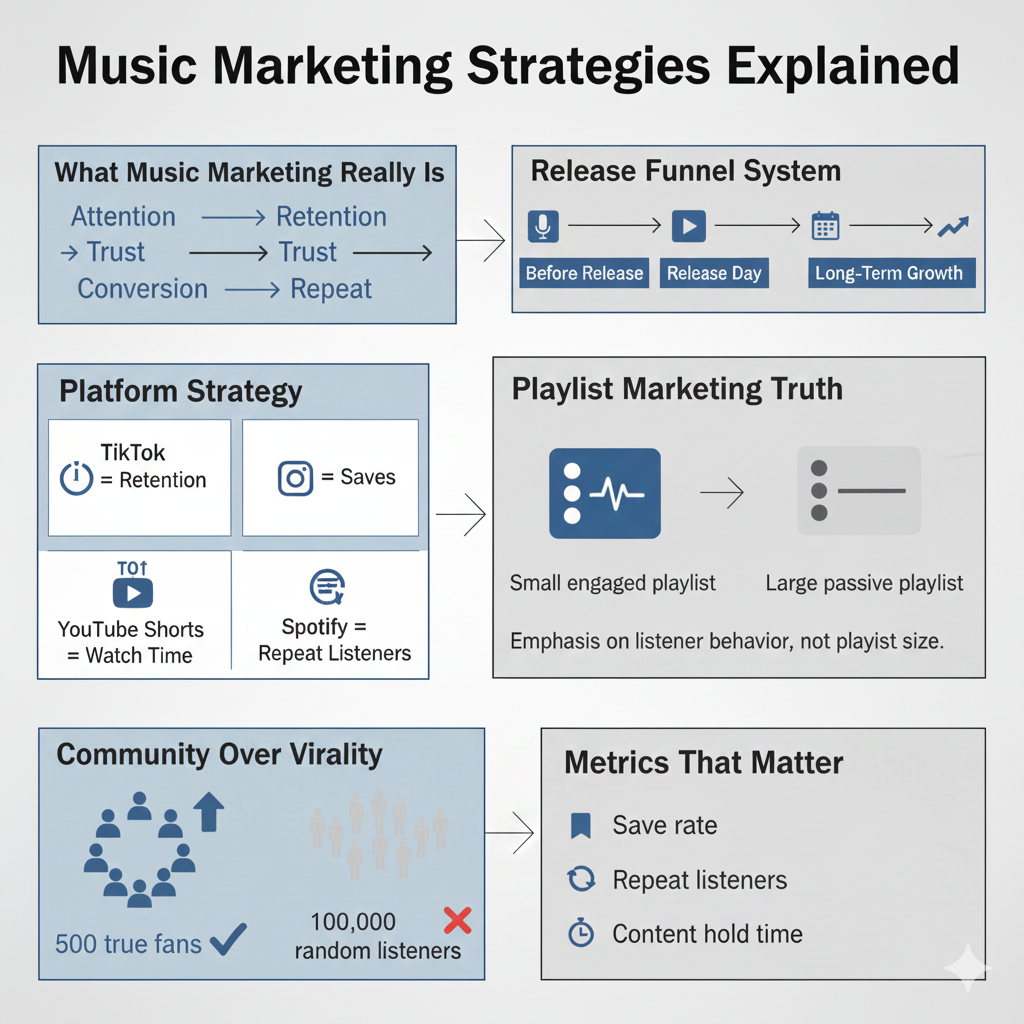
The real goals are audience retention, algorithmic trust, and fan conversion through email, SMS, Discord, or ticket sales.
In real campaigns I have worked on, artists who focused only on streams plateaued quickly. Artists who focused on fan depth grew slower at first but scaled far more consistently over time.
Strategy 1 Build a Release Funnel Not a Release Date
Most artists treat releases as isolated events. Professionals treat them as funnels.
A high performing release funnel usually looks like this.
Pre release audience warming through short form clips and behind the scenes content
Algorithmic trigger points like early saves, profile visits, and repeat listens
Off platform capture through email or SMS once interest is proven
Post release storytelling that explains why the song exists, not just that it exists
From real experience, the biggest mistake is skipping off platform capture. Social platforms can change or collapse overnight. Artists who owned their audience lists survived algorithm shifts with far less damage.
Strategy 2 Platform Specific Content Not Cross Posting
One of the most ignored but effective music marketing strategies is intent based content creation.
TikTok content that works usually includes narrative hooks in the first two seconds, incomplete stories that force replays, and context before the chorus.
Instagram content that works focuses on visual identity consistency, short captions that encourage saves, and carousel based storytelling.
YouTube Shorts content that works is performance first, prioritizes strong audio before visuals, and relies on repetition more than novelty.
From hands on testing, cross posting the same video everywhere reduced engagement by up to forty percent. Platform native content consistently performed better.
Strategy 3 Playlist Marketing Without Burning Your Algorithm
Playlist pitching is where many artists damage their long term growth.
Here is a niche insight most articles miss. Spotify’s algorithm evaluates listener behavior more than playlist size. A five thousand follower playlist with high completion rates often outperforms a one hundred thousand follower playlist with passive listeners.
Best practices include prioritizing genre tight playlists, avoiding paid placements with no listener data, and tracking skip rate after placement.
In real campaigns, removing low quality playlist placements improved Release Radar performance within two weeks.
Strategy 4 Micro Communities Beat Mass Exposure
One overlooked music marketing strategy is community scaling before audience scaling.
Instead of chasing one hundred thousand random listeners, focus on building five hundred true fans. Reward early supporters with exclusives and create two way communication instead of one way broadcasts.
Artists who ran private Discord servers or SMS lists converted listeners into buyers at much higher rates. This is where revenue stability comes from, not viral luck.
Strategy 5 Data Interpretation Not Obsession
Analytics are tools, not goals.
The metrics that actually matter include save to listener ratio, repeat listener percentage, and content hold time in the first three seconds.
One real world pattern I have seen repeatedly is that artists who adjusted content based on retention instead of views doubled organic reach within months.
Common Mistakes Killing Music Marketing Results
Promoting songs before testing audience response
Running ads without creative testing
Ignoring brand consistency
Treating marketing as a one time task
Marketing is not something you do only for a release. It is something you build into your identity.
FAQs About Music Marketing Strategies
What is the most effective music marketing strategy for independent artists
The most effective strategy is building a repeatable content and release system that captures audience data off social platforms while feeding algorithmic signals consistently.
How long does music marketing take to show results
Meaningful results usually appear after sixty to ninety days of consistent execution. Viral success is rare. Sustainable growth is engineered.
Are paid ads necessary for music marketing
No, but they accelerate learning. Ads work best when used to test content, not to force streams.
Should artists focus on one platform or many
Early on, focus on one discovery platform and one audience ownership platform. Expansion comes later.
Is playlist marketing still worth it
Yes, but only when quality and listener behavior matter more than playlist size.
Final Thoughts
Effective music marketing strategies are not about tricks or hacks. They are about understanding attention, building systems, and respecting the long game. Artists who treat marketing as part of their craft instead of an afterthought consistently outperform those who chase trends.
If there is one takeaway, it is this. Market like a professional long before you are paid like one. That mindset changes everything.