



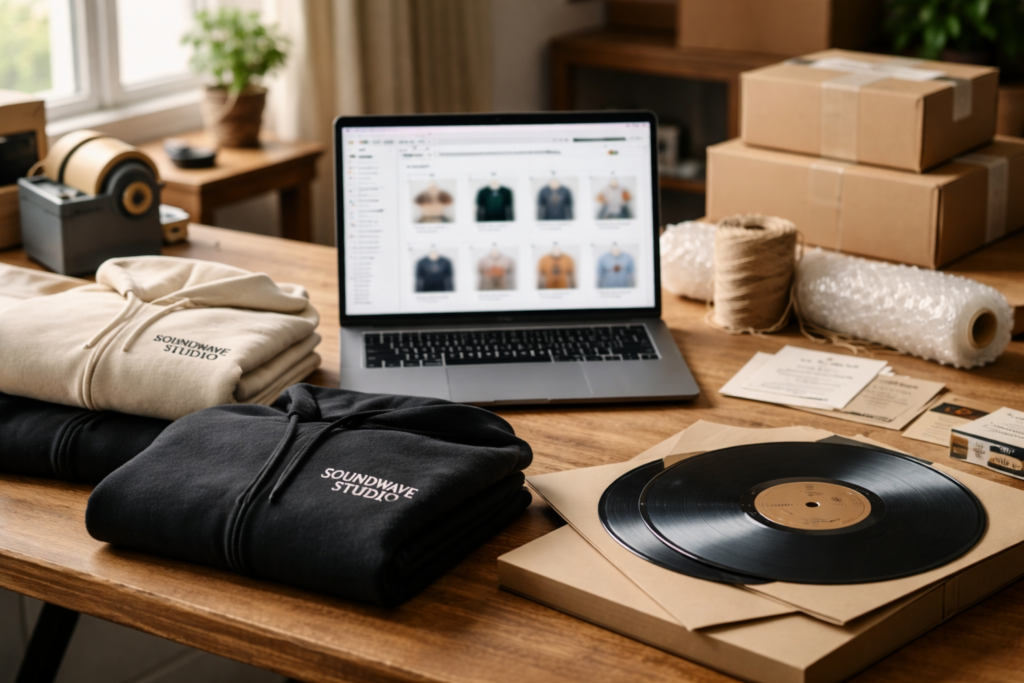
In today’s independent music economy, streams build exposure — but ecommerce builds income. Musicians who understand how to use Shopify strategically can turn casual listeners into paying customers through merch, digital products, and exclusive fan experiences.
Instead of depending only on streaming revenue from platforms like Spotify, smart artists build direct-to-fan ecommerce systems using Shopify to control branding, pricing, and customer relationships.
Your audience is not just a fanbase.
It’s a customer base — if you build the right system.
Why Every Serious Artist Needs an Ecommerce Store
Social media builds attention.
Streaming builds awareness.
Ecommerce builds ownership.
With Shopify, musicians can:
- Sell branded merchandise
- Launch limited edition drops
- Offer digital downloads
- Bundle music with physical products
- Collect customer emails
- Automate post-purchase flows
Owning your store means owning your revenue pipeline.

Step 1: Build a Brand-Driven Store (Not a Random Merch Page)
Your Shopify store should reflect your music identity.
Key elements:
- Clean homepage with brand visuals
- Clear product categories
- Professional product photography
- Story-driven product descriptions
- Mobile-optimized design
Fans buy emotion, not just products.
Your store should feel like an extension of your music world.
Step 2: Create High-Value Product Types
Successful musician ecommerce stores sell more than t-shirts.
Smart product ideas:
- Limited edition hoodies
- Signed vinyl
- Digital beat packs
- Exclusive acoustic versions
- VIP backstage passes
- Bundle drops (hoodie + album + signed poster)
Bundles increase average order value.
Exclusivity increases urgency.
Step 3: Build a Smart Sales Funnel
Instead of sending fans directly to a product page, build a funnel.
Example ecommerce funnel:
Social Media Content
↓
Landing Page
↓
Email Capture
↓
Product Drop Announcement
↓
Limited-Time Offer
This creates anticipation and increases conversion rates.
Scarcity + storytelling = higher sales.
Step 4: Use Email Automation to Increase Revenue
Shopify integrates with email tools to automate:
- Welcome sequences
- Cart abandonment emails
- Post-purchase thank you flows
- VIP discount campaigns
Email follow-ups recover lost sales and increase repeat purchases.
One email reminder can recover 10–20% of abandoned carts.
Step 5: Launch Strategic Product Drops
Instead of selling merch year-round passively, launch timed drops.
Example drop strategy:
- 2-week teaser campaign
- Countdown posts
- Early access for email subscribers
- Limited quantity stock
- 72-hour window
This builds hype and creates buying momentum.
Drops outperform passive stores.
Step 6: Retarget Website Visitors with Ads
When fans visit your store but don’t buy, retarget them.
Run ads on Instagram and Facebook targeting:
- Website visitors
- Cart abandoners
- Email subscribers
- Past buyers
- Retargeting increases conversion efficiency dramatically.
Step 7: Track Ecommerce Metrics
Serious artists monitor:
- Conversion rate
- Average order value
- Customer acquisition cost
- Email subscriber growth
- Repeat purchase rate
Data turns merch into a scalable business.
Step 8: Turn Customers Into Superfans
When someone buys from you, they’re more invested.
After purchase:
- Send personalized thank-you emails
- Offer loyalty discounts
- Invite them to private fan groups
- Provide early access to releases
Customers become ambassadors.
The Smart Ecommerce Growth Formula
To turn fans into paying customers:
- Build a brand-driven Shopify store
- Offer high-value products
- Create limited drops
- Capture emails before selling
- Automate follow-ups
- Retarget visitors
- Track and optimize
Ecommerce is not about selling more products.
It’s about building a system.
Final Thoughts
Independent musicians who master ecommerce gain financial independence. By using Shopify strategically, artists can transform streaming attention into direct revenue and long-term customer relationships.